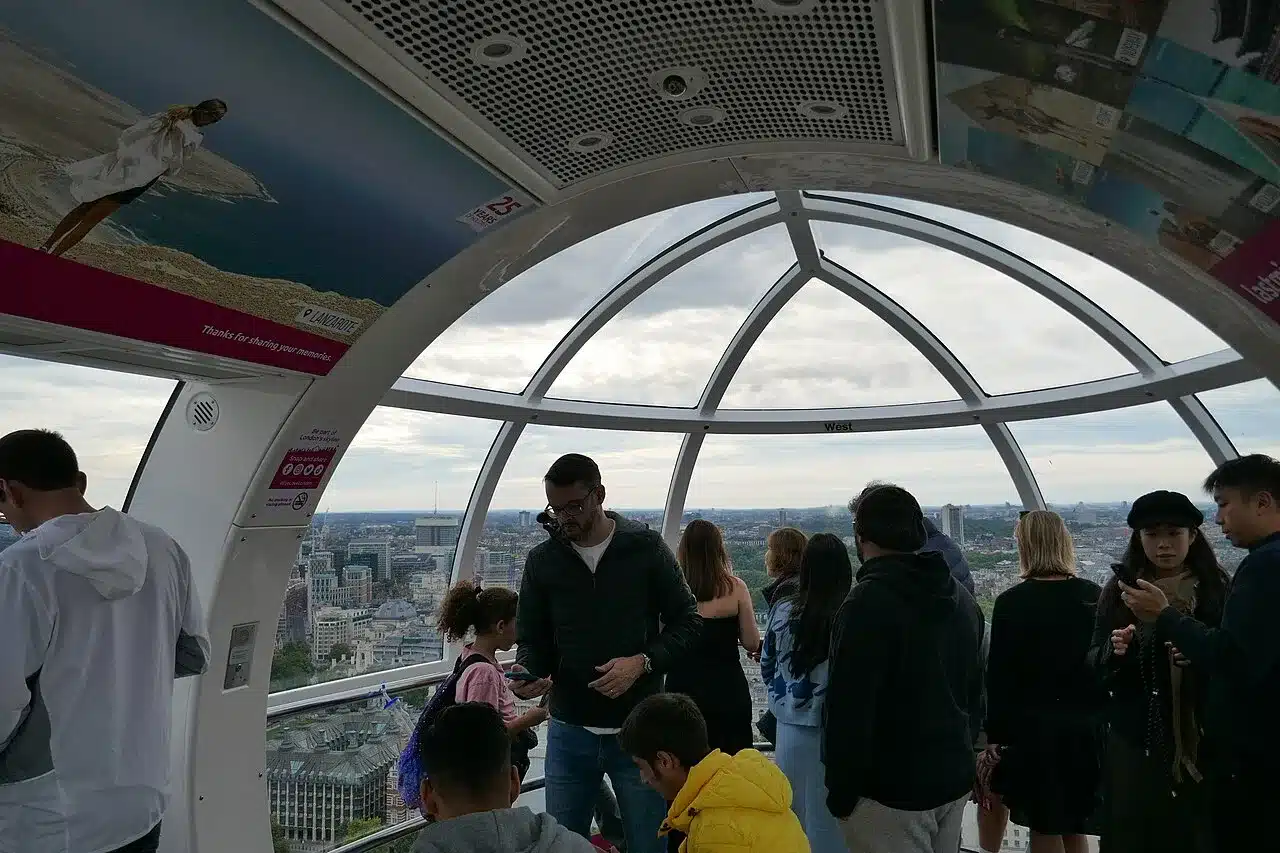
Westminster and the South Bank
The Abbey, the London Eye and a level riverside walk.
Access: step-free throughout
Book ahead: the Eye


Step-free routes, wheelchair access at the major sights, free companion tickets, accessible transport and quiet sessions: a practical guide for visitors with limited mobility or other access needs.
The most accessible things to do in London are the big free museums (the British Museum, National Gallery, Tate Modern, Natural History Museum, Science Museum and V&A), the London Eye, Westminster Abbey, Tower Bridge, a river trip by Uber Boat and the level riverside walk along the South Bank. All have step-free entrances, most lend wheelchairs free of charge, and many paid attractions admit one companion free. Getting between them is easier than the Underground’s reputation suggests: every London bus has a ramp and a wheelchair space, every black cab takes a wheelchair, and 92 Tube stations plus all 41 Elizabeth line stations are step-free (Transport for London). The difficult places are the oldest ones: the Tower of London’s towers and the dome of St Paul’s are reached only by stairs.
Choose where to start:
The Abbey, the London Eye and a level riverside walk.
Access: step-free throughout
Book ahead: the Eye
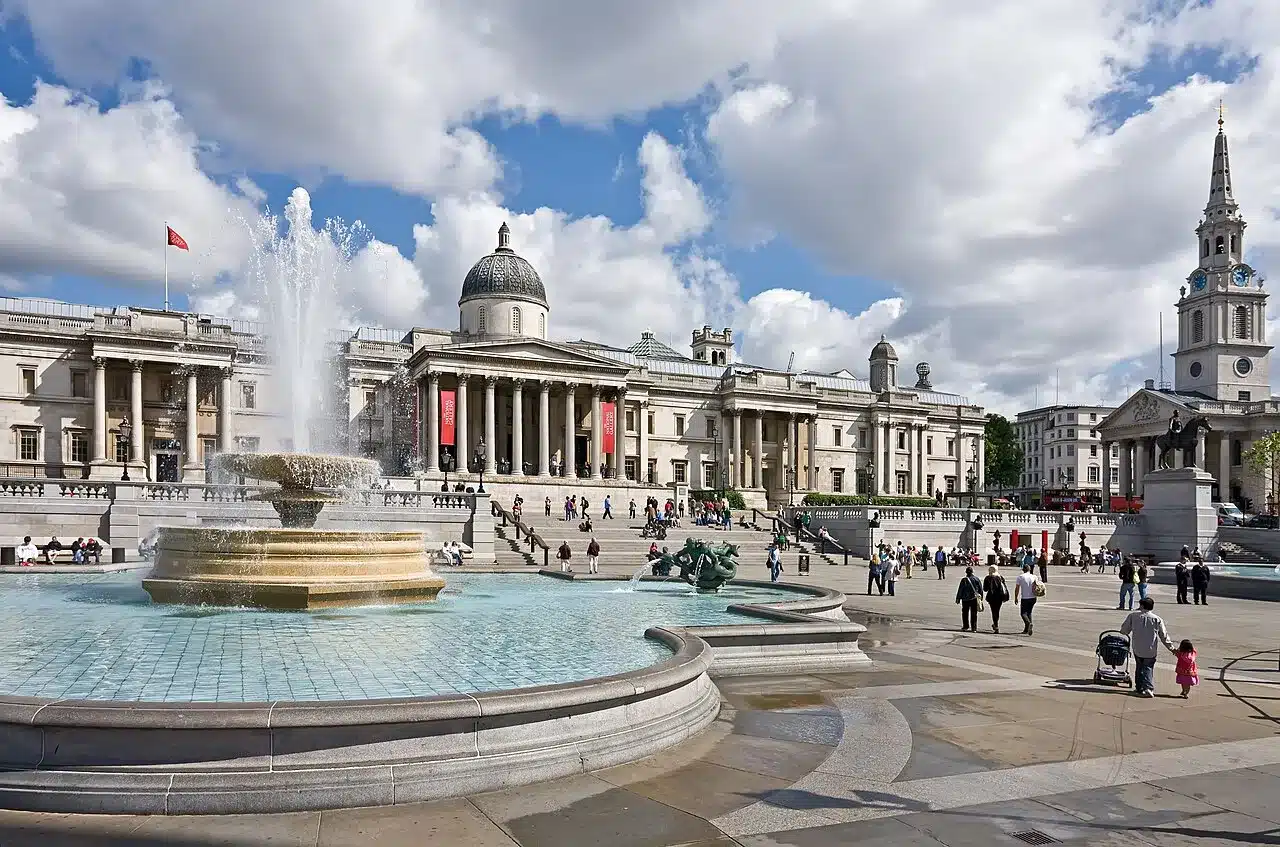
Two free collections with lifts, wheelchairs and step-free doors.
Access: step-free; wheelchairs to borrow
Book ahead: wheelchairs
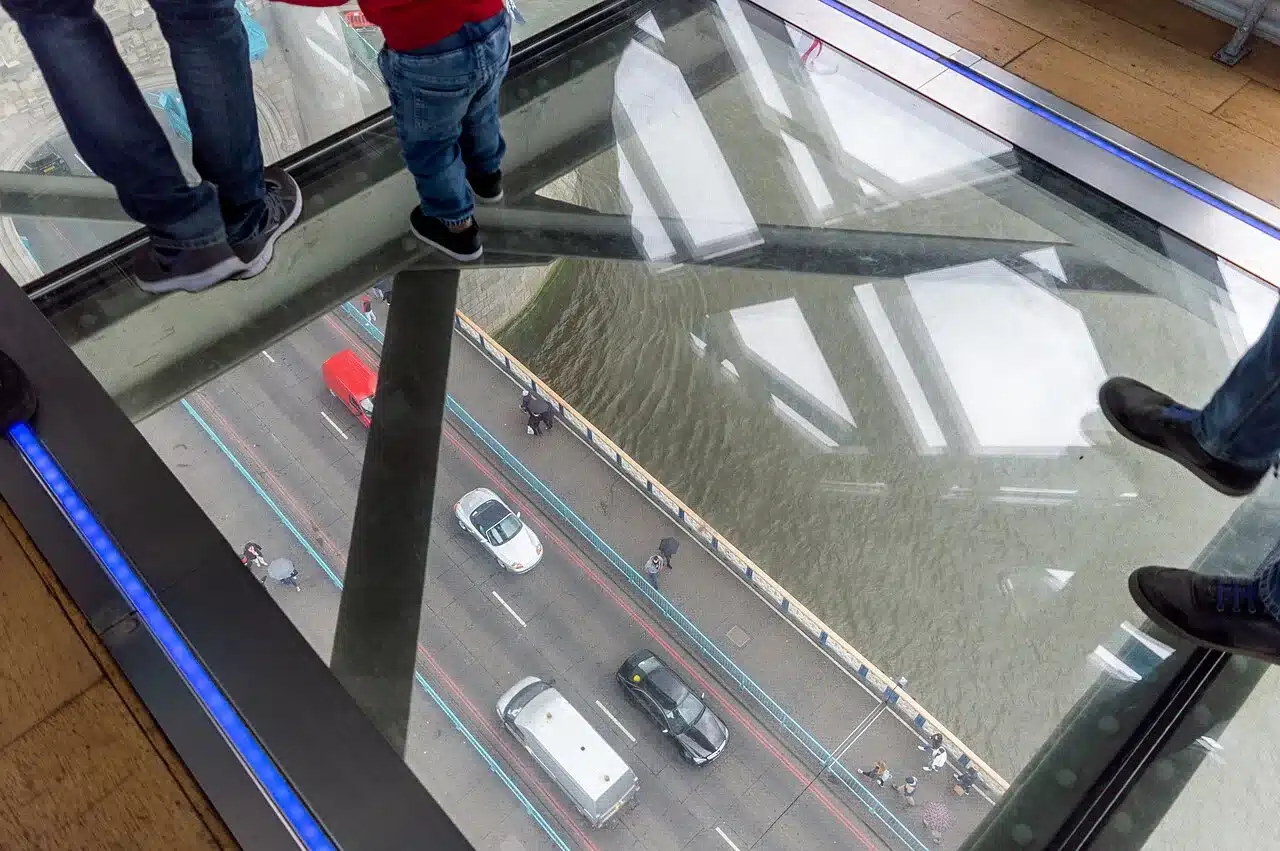
A partly accessible castle and a fully accessible bridge.
Access: cobbles and stairs at the Tower
Book ahead: no

What is step-free and what is free of charge.
Access: ramps on every bus
Book ahead: no
Each plan starts at a Tube station with lifts and keeps to step-free routes. Lifts do go out of service, so check live lift status in the TfL Go app on the morning. Details are from the venues’ own access pages, read in November 2026.

Book in advance: the London Eye wheelchair slot; Abbey entry.
Might cost money: the London Eye. Free: the Abbey for a disabled visitor and companion, and Tate Modern.
Book in advance: a British Museum wheelchair, and a free timed ticket at busy times.
Might cost money: nothing; both museums are free.
Book in advance: Tower tickets, with the free carer ticket.
Might cost money: the Tower, Tower Bridge and the boat.
A summary of each venue’s own access information in November 2026. Follow the link for the full guide, and contact the venue if you use a large powered chair or a mobility scooter, as lift sizes and scooter rules vary.
| Attraction | Step-free access | Wheelchairs to borrow | Companion ticket | Good to know |
|---|---|---|---|---|
| British Museum | Level entrance on Great Russell Street; lifts | Yes, free; pre-book | Free museum | Main highlights on the ground floor |
| National Gallery | All entrances step-free | Yes | Free museum | Changing Places toilet in the Sainsbury Wing |
| Tate Modern | See Tate’s access page | Yes, free; scooters with 24 hours’ notice | Free museum | Changing Places toilet; two quiet rooms |
| Natural History Museum | Cromwell Road entrance, by a steep ramp | Yes, free | Free museum | Changing Places toilet |
| Science Museum | Yes, except two mezzanines | Yes | Free museum | Changing Places toilet on Level 0 |
| V&A | Cromwell Road and Exhibition Road entrances | Yes | Free museum | No Changing Places toilet |
| London Eye | Fully accessible | Check with the venue | Free carer ticket with proof | Two wheelchair users per capsule, eight on the wheel; boarding gate and ramp take chairs and scooters up to 37 inches (about 94 cm) wide; book a wheelchair time slot ahead |
| Westminster Abbey | North Door and Great West Door | Yes, free | Disabled visitor and one companion free | Lift to the Jubilee Galleries |
| St Paul’s Cathedral | Ramped North Transept entrance; lift to the crypt | Check with the venue | Disabled visitor and carer free | Dome galleries are stairs only |
| Tower of London | Partial; cobbles and steps | Yes, free | One carer free | Crown Jewels have level access |
| Tower Bridge | Lifts to walkways and Engine Rooms | Yes | Check with the venue | Relaxed openings are held |
| Buckingham Palace State Rooms (compare tours from $26.61) | Yes, but must be pre-booked | Yes, pre-booked | Free companion ticket | Summer opening only |
| The View from The Shard | Step-free to Level 72 | Check with the venue | Free carer ticket with proof | Carer ticket is issued on arrival |
| Kew Gardens | See Kew’s access page | Yes, at all gates; scooters booked two weeks ahead | Essential companion free | Large site; plan a short route |
| London Zoo | See the zoo’s access page | Yes, £25 deposit; scooters £20 plus deposit | Carer free | Changing Places toilet |
| Warner Bros. Studio Tour (compare tours from $119.75) | Mostly; the Hogwarts bridge and train carriages have stairs | Yes, free | Free companion ticket | Sensory rooms and relaxed tours |
Buses are the most reliable step-free transport in London. Every route uses low-floor buses with a ramp and a dedicated wheelchair space, and wheelchair and mobility scooter users travel free on buses and trams; a companion pays the normal fare (TfL, TfL fares). All licensed black taxis have a ramp and space for a wheelchair, and can be hailed in the street.

Ninety-two Tube stations, more than a third, are step-free from street to platform, as are all 41 Elizabeth line stations and the whole DLR (TfL). The step-free Tube guide shows which lines are step-free at each station, and it matters: Waterloo is step-free on the Jubilee line only, Victoria on the Victoria line only, and Paddington on the Elizabeth and Hammersmith & City lines. Step-free stations useful to visitors include Westminster, Green Park, King’s Cross St Pancras, London Bridge, Bond Street and Tower Hill.

The river is often the most comfortable way to cross the centre. Uber Boat by Thames Clippers takes wheelchairs, including powered chairs, on every boat (Thames Clippers). Sightseeing boats are more limited: City Cruises says it can carry up to two wheelchair users per boat, that passengers must be able to walk aboard, and that electric wheelchairs cannot be taken; it gives 50% off for a wheelchair user and companion at the pier (City Cruises). If you use a powered chair, choose the river bus.
Check the access details on each listing and contact the operator before you book if you have specific needs.
Affiliate links. We earn a commission on qualifying bookings made through these links, at no extra cost to you.
Affiliate links. We earn a commission on qualifying bookings made through these links, at no extra cost to you.
Some travellers prefer to book through GetYourGuide, which has its own reviews, prices and cancellation terms. If that is you, these are some of the most reviewed London sightseeing there. The widget loads live prices from GetYourGuide, and we may earn a commission if you book through it.
Largely, yes. All buses and black taxis take wheelchairs, the major museums are step-free with wheelchairs to borrow, and 92 Tube stations plus the whole Elizabeth line and DLR are step-free. The main obstacles are older Tube stations and historic buildings such as the Tower of London.
On buses and trams, yes: wheelchair and mobility scooter users travel free, and companions pay the normal fare. Tube and rail fares are charged as usual.
They include Westminster, Green Park, King’s Cross St Pancras, London Bridge, Bond Street, Tower Hill and Tottenham Court Road (Elizabeth and Northern lines). Leicester Square, Covent Garden and Piccadilly Circus are not. Check TfL’s step-free Tube guide.
Yes. It is fully wheelchair accessible, but only two wheelchair users can ride in each capsule and eight on the wheel at a time, so book a wheelchair time slot in advance. The boarding gate and ramp take chairs up to 37 inches (about 94 cm) wide. A carer’s ticket is free with proof.
Partly. The grounds are cobbled and many towers have only stairs, but the Jewel House with the Crown Jewels has level access. Wheelchairs can be borrowed and one carer is admitted free.
Yes. There is step-free entry through the North Door and the Great West Door, wheelchairs to borrow and a lift to the Jubilee Galleries. Disabled visitors and one companion are admitted free.
Some attractions, including Westminster Abbey and St Paul’s Cathedral, admit the disabled visitor and a companion free. Many others charge the visitor but give a free ticket to an essential companion. Bring proof.
The major museums have accessible toilets. Changing Places toilets with hoists are at Tate Modern, the National Gallery, the Natural History Museum, the Science Museum, the Tower of London and London Zoo.


